It’s more of the same at NCAT today, with (2) two Appeal Panel Members awarding costs of $10,000.00 against a self-represented Appellant in favour of Commissioner of Police, NSW Police Force.
The fact this happened at appeal level the only avenue of review is the NSW Supreme Court, and NCAT knows this.
The victim has to weigh up whether or not it’s actually viable to appeal a clear error in law in a forum that is usually out of financial reach of most people.
In this case the matter concerned the Government Information (Public Access) Act 2009, or GIPA.
The Object of the GIPA Act, Section 3, states Parliament’s intention; not hope, not dream, not thought bubble; its actual intention was to: 3 Object of Act(1) In order to maintain and advance a system of responsible and representative democratic Government that is open, accountable, fair and effective, the object of this Act is to open government information to the public by—(a) authorising and encouraging the proactive public release of government information by agencies, and(b) giving members of the public an enforceable right to access government information, and(c) providing that access to government information is restricted only when there is an overriding public interest against disclosure.(2) It is the intention of Parliament—(a) that this Act be interpreted and applied so as to further the object of this Act, and(b) that the discretions conferred by this Act be exercised, as far as possible, so as to facilitate and encourage, promptly and at the lowest reasonable cost, access to government information.
In brief, the object and purpose is to make government accountable; keep it fair and effective, and open it up to democracy and scrutiny. It gives the public an enforceable right to access government information; the reference to restriction of information on an overriding public interest against disclosure does not contemplate decision-makers fabricating excuses. It also states its purpose is to facilitate and encourage as far as possible, access to government information promptly and at the lowest reasonable cost.
Hmmmmmmm, no reasonable person would consider $10,000.00 as punishment for seeking access to government information low in cost.
But let’s look further into this piece of the public’s beneficial legislation, as quoted in 2014 by an NCAT Member and ex-NSW Information Commissioner and one who helped draft the legislation, in the case of BGD v Commissioner for Victims Rights (2014) NSWCATAD 181. This is good caselaw which makes clear what constitutes beneficial legislation, as opposed to penal or fiscal.
In today’s case, the legislation is the GIPA Act 2009. And there is no doubt it is beneficial in nature.
The GIPA Act 2009 does not have any clause or section relating to the seeking of costs; costs in the context of legal costs.
This is important to note.
Other Acts such as the Residential Tenancies Act 2010, does have a clause relating to costs.
This is where the NSW Civil & Administrative Tribunal Act 2013, NCAT Act, comes in.
It is the GIPA Act 2009 in today’s case which was the enabling legislation, basically enlivening the Application in the Tribunal in the first place.
It is the NCAT Act 2013 which gives Tribunal Members the jurisdiction to deal with the Application.
However repeatedly causing a stumbling block is the NCAT Act 2013 Section 60. Yes, this Section refers to costs. First it states each party pays their own costs. Then it says it can actually award costs in special circumstances.
Go figure that one out if you’re just starting out in your NCAT / GIPA journey and you’re standing at the bar table alongside one of the many Crown Solicitors who always think they’re special !
Now, let’s introduce the NCAT’s Guidelines on Costs.
This is an internal policy document authored by the President of NCAT. It’s dated August 2017 so predates the current President Her Honour Lea Armstrong. But no doubt Her Honour is up to speed on it, particularly after being petitioned on it specially in August 2024.
This little gem makes clear NCAT has the discretion to award costs, and it is a discretion which sees patterns of behaviours by certain Tribunal Members who seem to enjoy awarding costs, “but only if a particular law gives the Tribunal the discretion to do so.”
The reference to ‘a particular law’ is the reference to the enabling legislation.
In other words, if the enabling legislation doesn’t make provision for costs then NCAT can’t do it. It must dismiss the Application for Costs at first instance. It has no powers to consider it.
It’s not based in law.
It’s not lawful.
It’s an absolute error in law.
As such, it can only be seen as punitive, knowing the victim of a costs order in such circumstances MUST appeal to get that insatiable wolf off their back.
Adding to all this, just to be certain about this whole costs issue and whether or not the NCAT does have ultimate jurisdiction to award costs any time it chooses, we also need to consider the document authored by Her Honour Lea Armstrong in her former life as an employee of the NSW Crown Solicitor’s Office.
That document makes it clear with words to the effect “if it’s not in the statute, if it’s not arising out of the statute, it has no lawful basis. And agencies do not have powers to add to or amend the legislation to suit its purposes.”
Pretty powerful words!
This issue of costs is just one set out in a petition to the NSW Parliament seeking a public inquiry into NCAT and the NCAT Act 2013.
“The problem is, NCAT’s been doing this continuously since its inception, for over a decade now. Victims of these costs orders have been so focused on overturning the unlawful orders, they have been blinded from seeing NCAT doesn’t have the jurisdiction. This means even if an agency pursues their costs victims through the courts, unless they point out the Judgement is not based in law, we will all continue to see more and more of these damaging decisions. There is no excuse. NCAT Members know the law, they know how to read legislation, they know what statutory interpretation means. But they also know they’re sitting on a throne of power, and that it’s a great deal of effort and additional cost to seek any redress. They also know they enjoy immunity. As one memorable Tribunal Member stated in August 2024 ‘if you don’t like my decision you can appeal. You can take it all the way to the High Court if you want to!’ This is what the public deals with,” stated Telina Webb of NSW Freedom of Information.
“Until I worked out for myself there are no costs in either the GIPA Act 2009 or the PPIP Act 1998, I also paid the costs orders against me. I believed NCAT was right, I believed NCAT had properly interpreted the legislation, and I was of the view I’ll just it on the chin. Since 2023 my husband and I have paid approximately $55,000.00 to an Agency threatening Bankruptcy Proceedings in the Federal Court of Australia if we did not pay. To this date this Agency has not issued a single receipt for payment. And the funds do not appear anywhere in Annual Reports, leaving the question ‘where is the money?’ This is the character of NSW government agencies. They knew it was unlawful, but they did it anyway, and they’ve covered it up. We could not afford Federal Court justice, and that’s what they were counting on,” stated Webb.
Today’s decision is here. The GIPA Act 2009 is here. The NCAT Act 2013 , Section 60 is here. The Residential Tenancies Act 2010, Section 208 is here. NCAT’s Costs Guideline is here. Lea Armstrong’s letter of October 2016 is here. More information about NCAT and Costs is available here.
The fact this happened at appeal level the only avenue of review is the NSW Supreme Court, and NCAT knows this.
The victim has to weigh up whether or not it’s actually viable to appeal a clear error in law in a forum that is usually out of financial reach of most people.
In this case the matter concerned the Government Information (Public Access) Act 2009, or GIPA.
The Object of the GIPA Act, Section 3, states Parliament’s intention; not hope, not dream, not thought bubble; its actual intention was to: 3 Object of Act(1) In order to maintain and advance a system of responsible and representative democratic Government that is open, accountable, fair and effective, the object of this Act is to open government information to the public by—(a) authorising and encouraging the proactive public release of government information by agencies, and(b) giving members of the public an enforceable right to access government information, and(c) providing that access to government information is restricted only when there is an overriding public interest against disclosure.(2) It is the intention of Parliament—(a) that this Act be interpreted and applied so as to further the object of this Act, and(b) that the discretions conferred by this Act be exercised, as far as possible, so as to facilitate and encourage, promptly and at the lowest reasonable cost, access to government information.
In brief, the object and purpose is to make government accountable; keep it fair and effective, and open it up to democracy and scrutiny. It gives the public an enforceable right to access government information; the reference to restriction of information on an overriding public interest against disclosure does not contemplate decision-makers fabricating excuses. It also states its purpose is to facilitate and encourage as far as possible, access to government information promptly and at the lowest reasonable cost.
Hmmmmmmm, no reasonable person would consider $10,000.00 as punishment for seeking access to government information low in cost.
But let’s look further into this piece of the public’s beneficial legislation, as quoted in 2014 by an NCAT Member and ex-NSW Information Commissioner and one who helped draft the legislation, in the case of BGD v Commissioner for Victims Rights (2014) NSWCATAD 181. This is good caselaw which makes clear what constitutes beneficial legislation, as opposed to penal or fiscal.
In today’s case, the legislation is the GIPA Act 2009. And there is no doubt it is beneficial in nature.
The GIPA Act 2009 does not have any clause or section relating to the seeking of costs; costs in the context of legal costs.
This is important to note.
Other Acts such as the Residential Tenancies Act 2010, does have a clause relating to costs.
This is where the NSW Civil & Administrative Tribunal Act 2013, NCAT Act, comes in.
It is the GIPA Act 2009 in today’s case which was the enabling legislation, basically enlivening the Application in the Tribunal in the first place.
It is the NCAT Act 2013 which gives Tribunal Members the jurisdiction to deal with the Application.
However repeatedly causing a stumbling block is the NCAT Act 2013 Section 60. Yes, this Section refers to costs. First it states each party pays their own costs. Then it says it can actually award costs in special circumstances.
Go figure that one out if you’re just starting out in your NCAT / GIPA journey and you’re standing at the bar table alongside one of the many Crown Solicitors who always think they’re special !
Now, let’s introduce the NCAT’s Guidelines on Costs.
This is an internal policy document authored by the President of NCAT. It’s dated August 2017 so predates the current President Her Honour Lea Armstrong. But no doubt Her Honour is up to speed on it, particularly after being petitioned on it specially in August 2024.
This little gem makes clear NCAT has the discretion to award costs, and it is a discretion which sees patterns of behaviours by certain Tribunal Members who seem to enjoy awarding costs, “but only if a particular law gives the Tribunal the discretion to do so.”
The reference to ‘a particular law’ is the reference to the enabling legislation.
In other words, if the enabling legislation doesn’t make provision for costs then NCAT can’t do it. It must dismiss the Application for Costs at first instance. It has no powers to consider it.
It’s not based in law.
It’s not lawful.
It’s an absolute error in law.
As such, it can only be seen as punitive, knowing the victim of a costs order in such circumstances MUST appeal to get that insatiable wolf off their back.
Adding to all this, just to be certain about this whole costs issue and whether or not the NCAT does have ultimate jurisdiction to award costs any time it chooses, we also need to consider the document authored by Her Honour Lea Armstrong in her former life as an employee of the NSW Crown Solicitor’s Office.
That document makes it clear with words to the effect “if it’s not in the statute, if it’s not arising out of the statute, it has no lawful basis. And agencies do not have powers to add to or amend the legislation to suit its purposes.”
Pretty powerful words!
This issue of costs is just one set out in a petition to the NSW Parliament seeking a public inquiry into NCAT and the NCAT Act 2013.
“The problem is, NCAT’s been doing this continuously since its inception, for over a decade now. Victims of these costs orders have been so focused on overturning the unlawful orders, they have been blinded from seeing NCAT doesn’t have the jurisdiction. This means even if an agency pursues their costs victims through the courts, unless they point out the Judgement is not based in law, we will all continue to see more and more of these damaging decisions. There is no excuse. NCAT Members know the law, they know how to read legislation, they know what statutory interpretation means. But they also know they’re sitting on a throne of power, and that it’s a great deal of effort and additional cost to seek any redress. They also know they enjoy immunity. As one memorable Tribunal Member stated in August 2024 ‘if you don’t like my decision you can appeal. You can take it all the way to the High Court if you want to!’ This is what the public deals with,” stated Telina Webb of NSW Freedom of Information.
“Until I worked out for myself there are no costs in either the GIPA Act 2009 or the PPIP Act 1998, I also paid the costs orders against me. I believed NCAT was right, I believed NCAT had properly interpreted the legislation, and I was of the view I’ll just it on the chin. Since 2023 my husband and I have paid approximately $55,000.00 to an Agency threatening Bankruptcy Proceedings in the Federal Court of Australia if we did not pay. To this date this Agency has not issued a single receipt for payment. And the funds do not appear anywhere in Annual Reports, leaving the question ‘where is the money?’ This is the character of NSW government agencies. They knew it was unlawful, but they did it anyway, and they’ve covered it up. We could not afford Federal Court justice, and that’s what they were counting on,” stated Webb.
Today’s decision is here. The GIPA Act 2009 is here. The NCAT Act 2013 , Section 60 is here. The Residential Tenancies Act 2010, Section 208 is here. NCAT’s Costs Guideline is here. Lea Armstrong’s letter of October 2016 is here. More information about NCAT and Costs is available here.
Contact:
Office of the NSW Crown Solicitor, crownsol@cso.nsw.gov.au
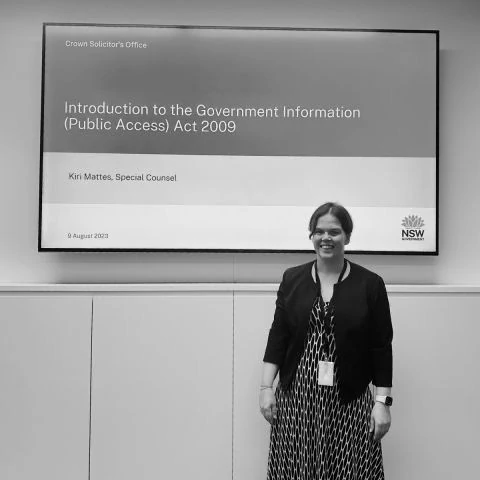
* It is noted the Crown Solicitor provides training and legal guidance concerning the GIPA Act 2009 and PPIP Act 1998 to ALL NSW government agencies. As such the public rightfully expects the Crown Solicitor to be fully informed about those Acts including the absence of legal ability to seek legal costs.
Those training courses are generally provided by Kiri Sue Mattes, kiri.mattes@cso.nsw.gov.au
Office of the NSW Crown Solicitor, crownsol@cso.nsw.gov.au
* It is noted the Crown Solicitor provides training and legal guidance concerning the GIPA Act 2009 and PPIP Act 1998 to ALL NSW government agencies. As such the public rightfully expects the Crown Solicitor to be fully informed about those Acts including the absence of legal ability to seek legal costs.
Those training courses are generally provided by Kiri Sue Mattes, kiri.mattes@cso.nsw.gov.au
Contact us using this form to comment on this article.